Walk into a modern tailoring library and one name returns across jackets, legwear, livery, uniforms and beginner instruction: W. D. F. Vincent. Writing for The Tailor and Cutter and published in London by The John Williamson Company at 42 Gerrard Street, Vincent set out to put working cutting-room method clearly on the page.
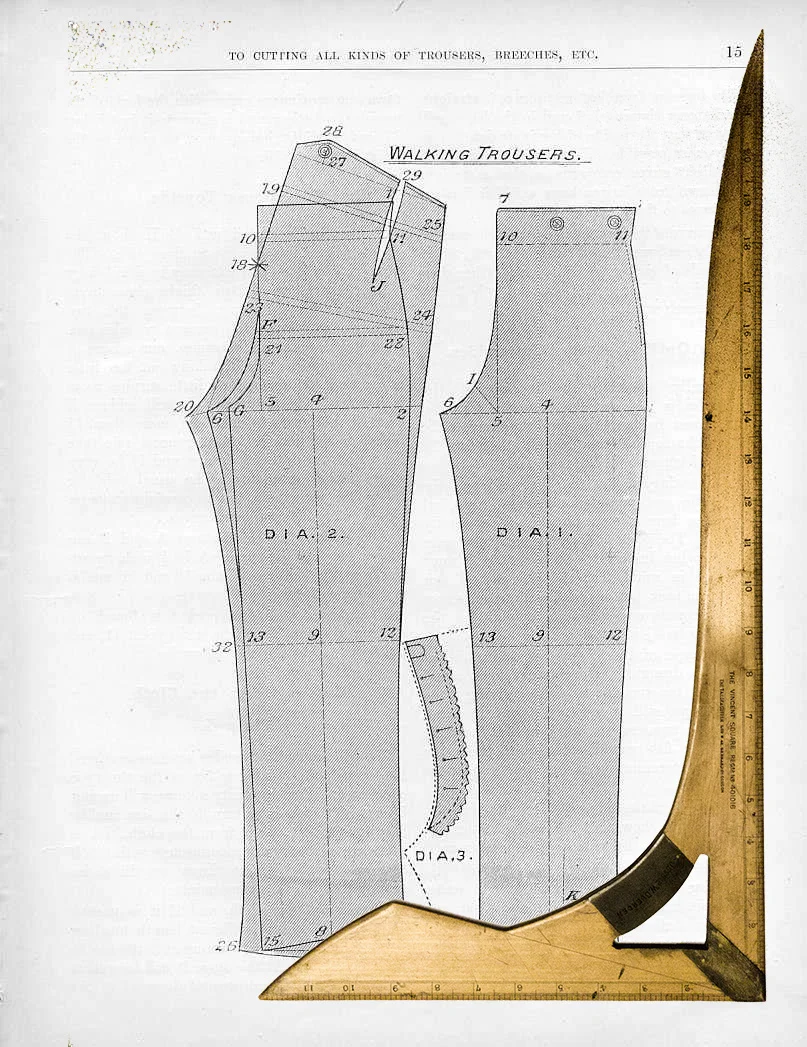
Rather than treating drafting as a secret passed by word of mouth, The Cutter’s Practical Guide breaks garments down step by step—measuring, drafting proportions with the wooden Vincent square, diagnosing fitting faults and adapting patterns for figures that depart from standard proportions.
Four specialist volumes in The Cutter’s Practical Guide
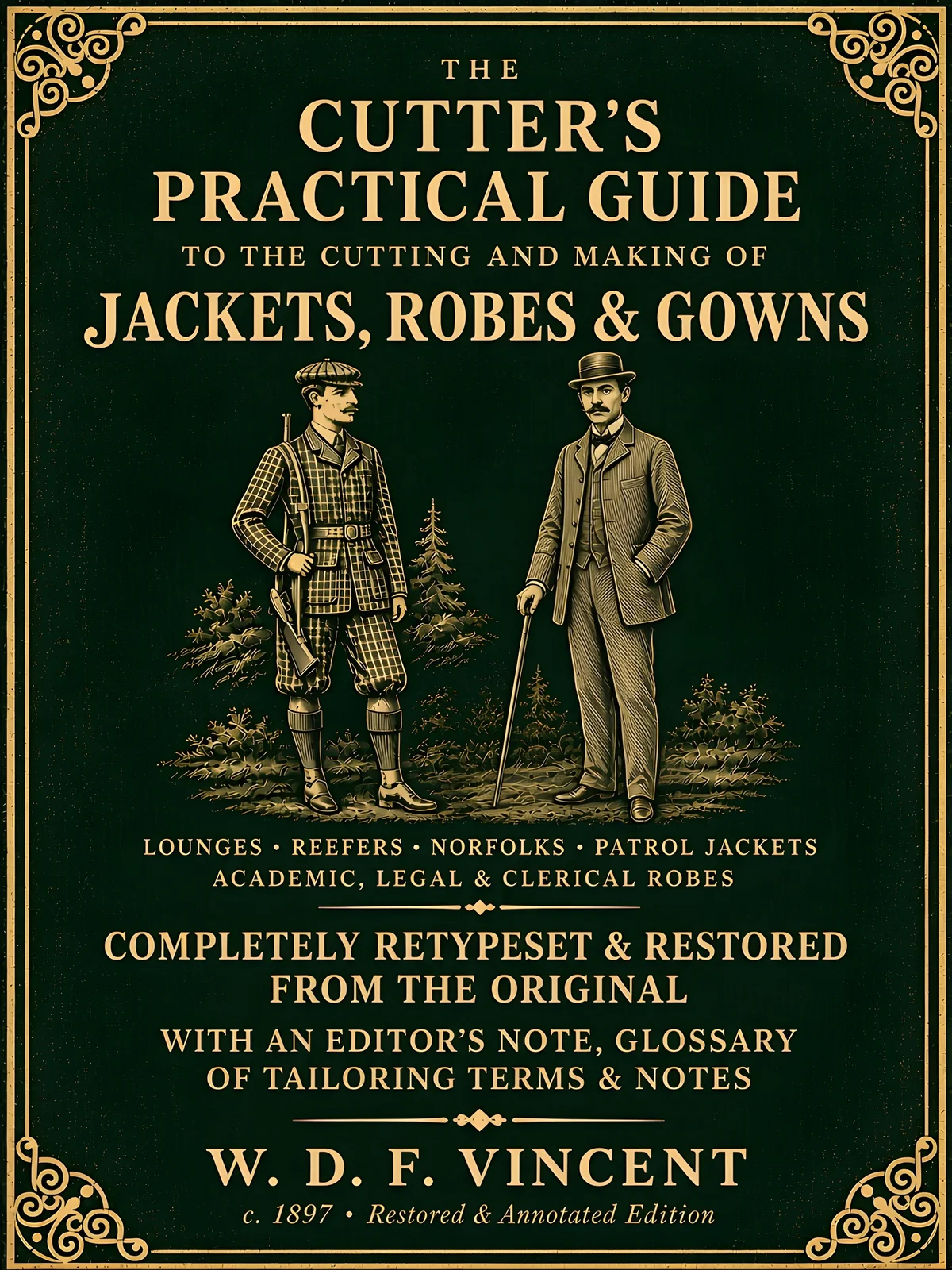
Our first collection brings together four specialist volumes of The Cutter’s Practical Guide alongside Vincent’s classroom course and his comprehensive Systems of Cutting. Jackets, Robes & Gowns (based on the ninth part, 1897) moves from the everyday lounge and reefer to dinner, Norfolk and patrol jackets, Highland dress and academic, legal, municipal and clerical robes.
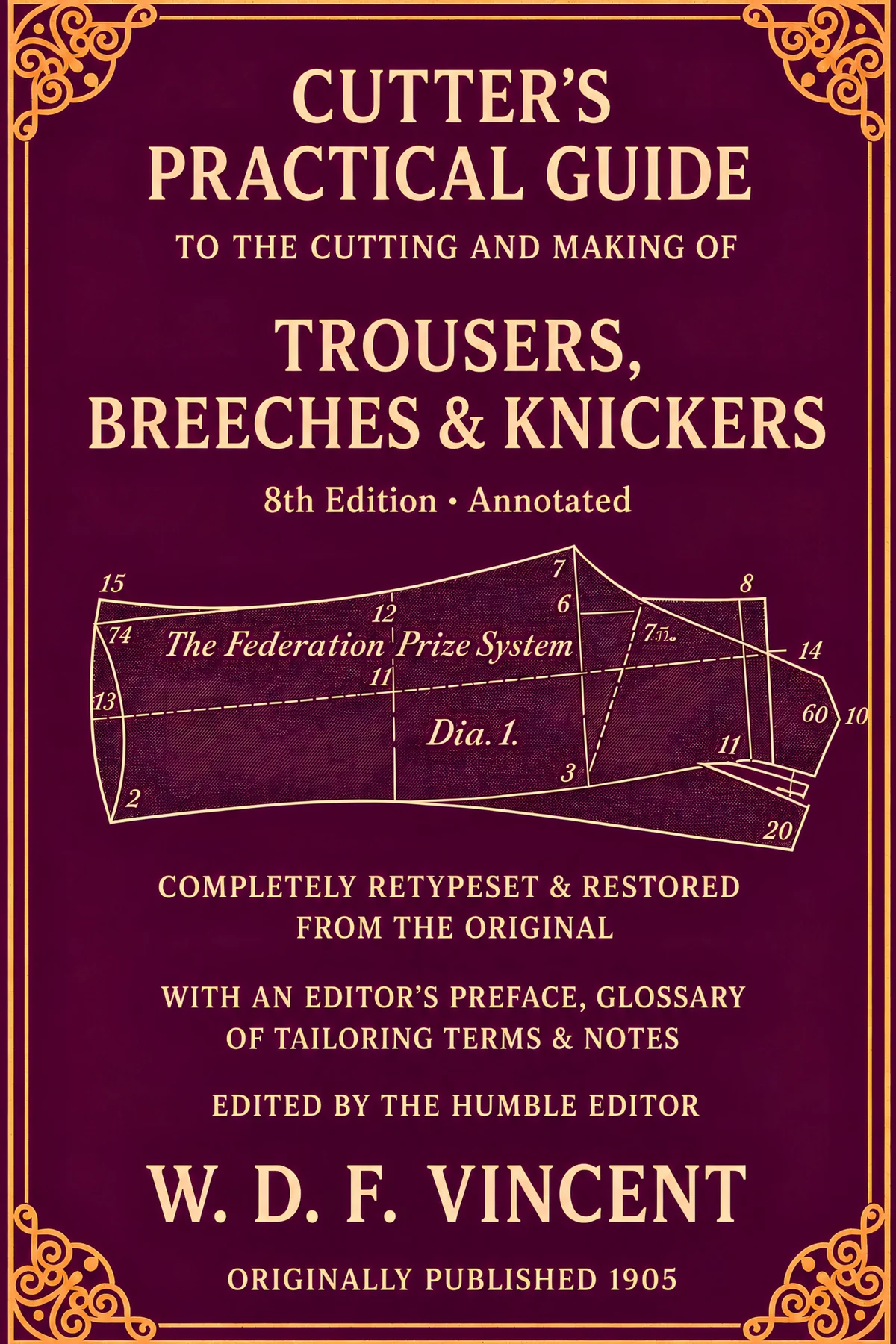
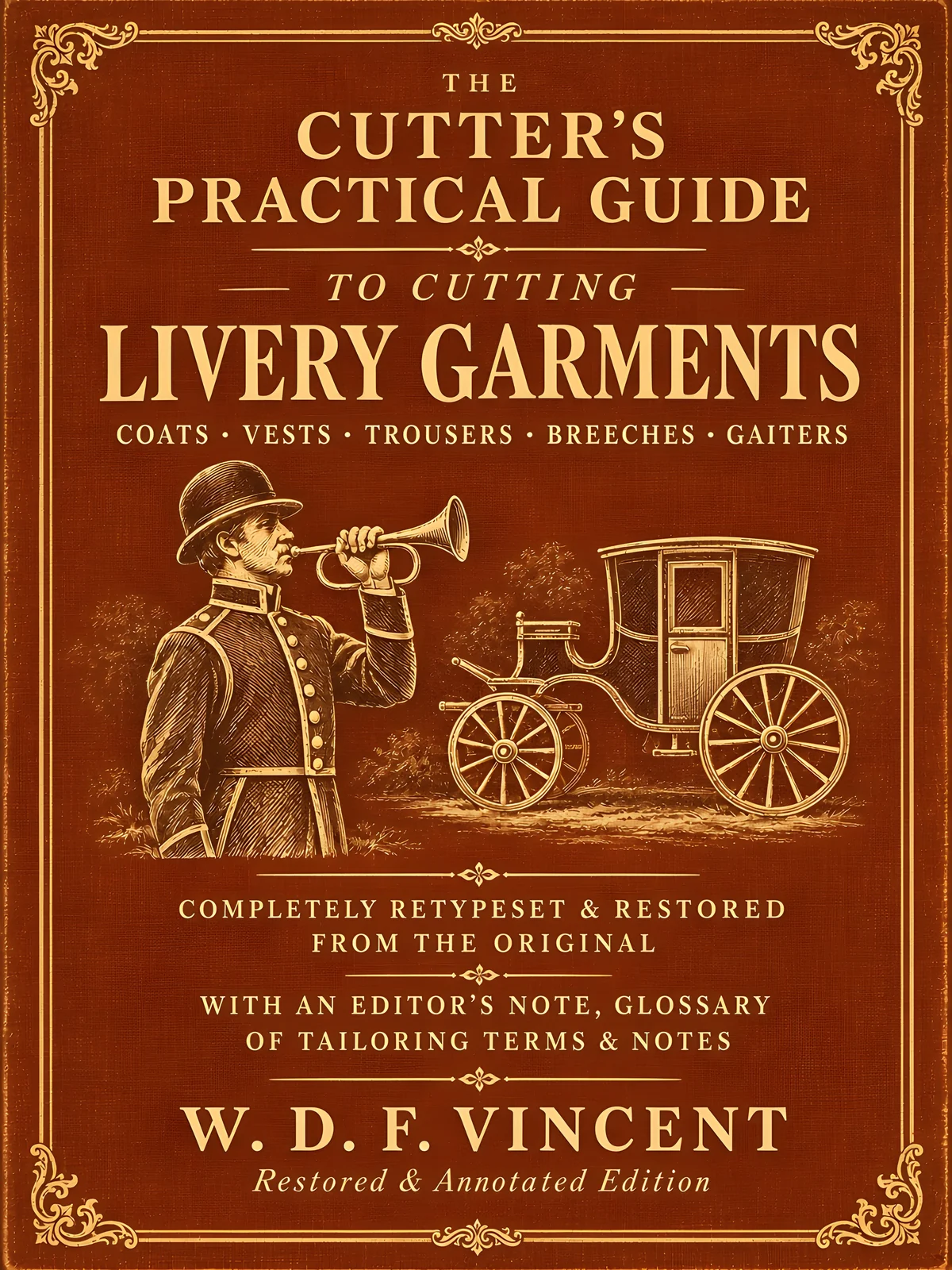
Trousers, Breeches & Knickers (based on the eighth edition) pairs the history of legwear with scientific cutting principles, fitting faults and their remedies, riding breeches, Highland kilts, leggings and gaiters. Livery Garments documents the dress of a great household—from coachmen, chauffeurs and grooms to footmen, butlers and ceremonial liveries—while Military Uniforms covers hussar full dress, tunics, mess jackets and the universal service frock.
Drafting instructions in historical context
Because Vincent’s plates explain proportion and balance relative to measures taken on the figure, his diagrams remain instructive to working tailors, costume makers, historical dress researchers and re-enactors today. Our restored editions preserve the historical drafting instructions—which are study and drafting guides rather than full-size printable sewing patterns—while adding modern editorial notes and glossaries of period tailoring terms.
Also read on our Payhip shop blog ↗ · Join our mailing list for future notes ↗